LGM Program Day Reflection – Health & Human Services Day 2026
H
ealth and Human Services Day, sponsored by Dartmouth Health, showed me and brought to light the fact that without each other, we cannot accomplish change that needs to happen.
We kicked off the morning at the Boys & Girls Club with an energized keynote from Craig Beck, Chief Operating Officer of Dartmouth Hitchcock Clinics. His message set the tone for the entire day: No one can work in a silo. Modern healthcare is far more than a doctor’s visit; it is a massive, collaborative ecosystem involving:
- Emergency Responders (EMTs) on the front lines.
- Pharmacists managing critical medications.
 Physical (PT) and Occupational Therapists (OT) guiding the path to recovery.
While much of work is necessarily reactive, answering the call in an emergency, Craig emphasized that true progress is proactive. By building these bridges now, we ensure a healthier future for our entire community.
The conversation continued at the Manchester Health Department with Philip Alexakos. We discussed how Manchester’s selection as a 2016 RWJF Culture of Health Prize winner set a regional benchmark for progress. The data shows that when we focus on community health, the results are life-changing.
Manchester is a city built on “Hard Work,” as stated in our moto, but that work includes maintaining the health of a diverse population across 33.1 square miles. To understand the scale of the challenge, we must look at the numbers: 15,000 residents living with disabilities; 5,906 veterans; 1,500 annual births; and 11.8% of our neighbors living below the poverty line.
Nowhere is collaboration more vital than in the fight against the opioid crisis. The ROAR team (Rapid Opioid Assistance in Recovery) operates on the principle that the first 48 hours after an overdose are the most critical for intervention. “If someone isn’t alive, they cannot get to recovery.” By reaching across borders to other New England departments, Manchester has turned reactive crisis management into proactive strategy. This isn’t just a moral imperative; it’s an economic one. In New Hampshire, preventable health costs reach $111.1 million. Yet, for every dollar spent on preventative care, the community sees a return of $1.90 to $2.70. Investing in education and support isn’t just saving money…it’s saving lives.
We often equate healthcare with medicine, but health is deeply tied to Social Determinants. We aren’t truly healthy unless we have:
- Sustainable Housing
- Access to Education
- Stable Employment
When these systems, Education, Research, Technology, and Insurance are intertwined, we create a safety net for everyone. From monitoring the water quality at Lake Massabesic to managing infectious diseases, the goal remains the same: moving from “reacting to illness” to “proactively building resilience.”
In a small group study that we did during this LGM day, we compared the North End to the Central City. Beneath the map lies a complex web of systemic challenges. “Higher poverty” isn’t just a lack of funds; it’s a lack of access to grocery stores, affordable housing, and timely medical care. We fix these systems by addressing the “broken windows,” both the literal ones in our neighborhoods and the metaphorical ones in our social structures.
During our panel discussion, one proverb served as our guiding light: “If you want to go fast, go alone. If you want to go far, go together.”
In public health, “going together” is a logistical necessity. With over 44 million patient interactions a year in our region, we must move healthcare out of the ICU and into the home. Every three years, non-profit hospitals conduct Community Health Needs Assessments. This year-long undertaking tells us exactly where the gaps exist. To close them, we must focus on:
- Food Security: Increasing access to healthy, unprocessed food.
- Literacy: Getting books into the hands of children to improve long-term outcomes.
- Economic Stability: Screening for social stressors (which now accounts for 85% of health screenings).
“Life expectancy can change based on where you live.” The goal is to change that reality by changing the resources that are provided in those spaces.
As leaders, we must “soak up” every opportunity to build relationships. The most important work is happening outside the hospital walls and in the neighborhoods and homes of the people we serve.
For lunch, we transitioned to the Manchester Fire Department to reflect on our ride-alongs with the Squad Crew throughout March and April. The experience was eye-opening. Beyond the technical skill, our key takeaway was the profound level of empathy and care these firefighters bring to every call. The Squad Team doesn’t just respond to emergencies; they act as a bridge to resources for those in our city who need them most. 
We reflected on the dual nature of their bravery…not only facing the physical danger of a fire but also the emotional weight of being there for people at their most vulnerable. Chief Hickey’s presentation underscored the reality of modern fire service, noting that 75% of calls in Manchester are now EMS-related. We all left with our two-year CPR certification and a vital takeaway: in a crisis, ‘Doing something is better than doing nothing.’
Of all our class sessions, the most profound impact came from touring the facilities at Families in Transition with Lauren Bombardier, Mike Lynch, and Samantha Robertson. This organization is a true lifeline for Manchester, providing a pathway from crisis to stability. At the Family Shelter, I saw firsthand how they set families up for success, not just by providing a roof, but by pairing them with dedicated case managers and connecting them to affordable housing and vital resources.
I was equally struck by the Food Pantry. This almost entirely volunteer-run operation feeds those in the shelters, transitional housing, and permanent residences, while also providing ‘Welcome Home’ baskets to help families start their next chapter. However, the Emergency Shelter offered a stark look at the sheer scale of the need. Serving three meals a day and sheltering 138 people every single night, the staff operates with a level of dedication that is hard to put into words.
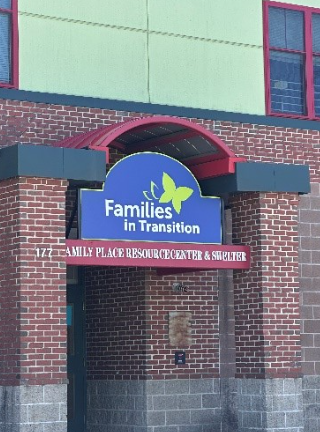
It also brought to light a harsh reality: the shelter is severely underfunded, operating with an annual deficit of approximately $1.4 million. Despite these challenges, their mission remains clear: to meet people in their most vulnerable states, ‘slow everything down,’ and provide for basic needs while building a foundation for the future. What moved me most was the unwavering dignity and respect shown to every individual. This experience stayed with me, and I have committed to signing up as a volunteer to support their mission.
Finally, we concluded our day at the Boys & Girls Club. This organization provides more than just a safe environment; it offers essential meals and a dedicated space for teenagers to thrive. I was particularly moved by the ‘teen store’ initiative, which grants local youth access to resources they otherwise would have had to travel to Orlando for, an opportunity many have never had. It was also inspiring to see the scale of their fundraising efforts, which directly fund resources and scholarships for those who need them most. Manchester is fortunate to have such an energetic and impactful program supporting our children and young adults.”
I left Health and Human Services with the following thought: Creativity + Collaboration = Opportunity.